
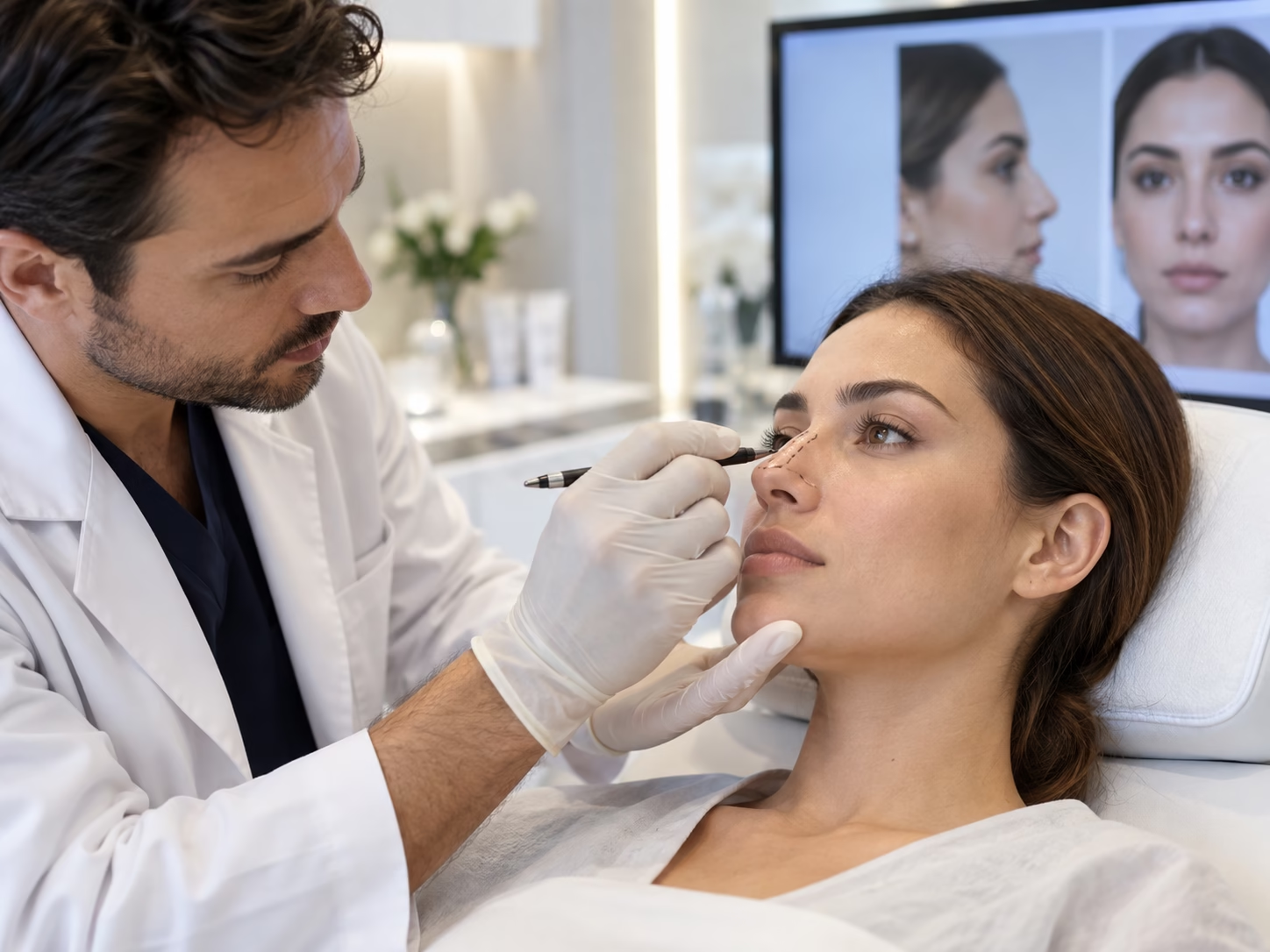
If you are planning rhinoplasty, one of the biggest concerns is often not the surgery itself but what happens afterwards.
How swollen will the nose look? When can you go back to work? When can you exercise again? How should you sleep? And perhaps most importantly, when will you actually see the final shape of your nose?
Rhinoplasty recovery happens gradually. While many people are able to return to routine activities relatively early, the nose continues healing and refining for several months.
For patients researching rhinoplasty recovery in Mumbai, understanding this timeline before surgery can help with planning work, social commitments, exercise and realistic expectations.
Dr. Kunal Sayani, MBBS, MS, MCh and DrNB (Plastic Surgery), provides rhinoplasty and facial aesthetic surgery consultations at his clinic in Vile Parle West, Mumbai.
Why Does Rhinoplasty Recovery Take Time?
Rhinoplasty involves reshaping structures that may include:
- Nasal bone
- Cartilage
- Soft tissue
- Skin
- Nasal tip
- Septum, when clinically required
Even when external bruising settles relatively quickly, the tissues inside the nose continue healing.
Swelling also does not disappear all at once.
The bridge may begin looking more defined earlier, while swelling around the nasal tip can take considerably longer to settle.
This is why the appearance of the nose a few days or weeks after surgery should not be considered the final result.
Rhinoplasty Recovery Timeline at a Glance
Every patient heals differently, but recovery can broadly be understood in stages.
First Few Days
The first several days usually involve the most noticeable swelling and congestion.
Patients may experience:
- Nasal swelling
- Bruising around the eyes
- A blocked or congested feeling
- Mild to moderate discomfort
- Temporary facial puffiness
- Difficulty breathing comfortably through the nose
- A feeling of pressure around the nose
A splint may be placed over the nose to protect the newly positioned structures during early healing.
Some patients may also have internal nasal support depending on the procedure performed.
Week 1: Protection and Early Healing
The first week is primarily about allowing the nose to heal without unnecessary pressure or trauma.
You may still have:
- Swelling
- Bruising
- Nasal congestion
- Tenderness
- Mild facial swelling
Patients are generally advised to rest and keep their head elevated.
The nasal splint is commonly removed around the end of the first week or according to the surgeon’s specific instructions.
The nose will usually still look swollen when the splint comes off.
This is normal.
The appearance at this stage should not be used to judge the final rhinoplasty result.
How Should You Sleep After Rhinoplasty?
Sleeping position matters during early recovery.
Patients are commonly advised to sleep with the head elevated rather than lying completely flat.
This can help manage swelling and may also reduce accidental pressure on the nose.
Sleeping on your back is generally preferable during the initial recovery period.
Try to avoid:
- Sleeping face-down
- Pressing the nose into a pillow
- Sleeping in positions where the nose may accidentally be hit
- Allowing young children or pets close enough to accidentally bump the face while sleeping
Your surgeon will advise how long these precautions are necessary based on your individual procedure.
Week 2: Bruising Usually Begins to Settle
By the second week, visible bruising around the eyes usually begins improving considerably for many patients.
Swelling will still be present.
However, patients may start feeling more comfortable returning to routine social activities.
Some people feel ready to return to office work within approximately one to two weeks, while others prefer additional time depending on:
- Extent of surgery
- Bruising
- Swelling
- Type of work
- Comfort level
- Whether the job involves physical activity
If your work is physically demanding, your return may take longer.
When Can You Return to Work After Rhinoplasty?
There is no universal return-to-work date.
People with desk-based jobs may usually return sooner than people whose occupations involve:
- Heavy lifting
- Frequent bending
- Physical contact
- Dusty environments
- Outdoor activity
- Risk of facial injury
If appearance is an important part of your work, you may also choose to wait until most obvious bruising has settled.
Always follow your surgeon’s clearance rather than planning solely around an online recovery timetable.
Weeks 3–4: Looking More Socially Presentable
During the following weeks, much of the initial facial bruising usually continues fading.
The nose will often begin looking more natural.
However, swelling may still make the nose appear:
- Wider than expected
- Less defined
- Slightly asymmetric
- Fuller around the tip
Temporary asymmetry during recovery does not automatically indicate a problem.
Different areas of the nose may settle at slightly different rates.
Patients should therefore avoid repeatedly comparing the nose with pre-operative photographs during the early healing stage.
Why Does the Nose Still Look Swollen After a Month?
Because the nasal tissues continue healing beneath the skin.
Rhinoplasty is different from procedures where the result becomes relatively stable within only a few weeks.
Swelling can persist for months, especially in:
- The nasal tip
- Areas where significant structural work was performed
- Patients with thicker nasal skin
The important change is usually that swelling becomes progressively less noticeable.
When Will the Tip of the Nose Look Defined?
The nasal tip is often one of the slower areas to settle.
Patients sometimes become concerned because the tip initially appears:
- Round
- Wide
- Firm
- Slightly elevated
- Less defined than expected
Early swelling can temporarily mask the underlying changes.
Final tip definition should therefore not be evaluated too early.
Months 1–3: Gradual Refinement
During the first few months, swelling continues to reduce and the nose gradually becomes more refined.
Patients often become increasingly comfortable with the appearance during this stage.
However, minor swelling may still fluctuate.
For example, some patients notice that the nose appears slightly more swollen:
- In the morning
- After strenuous activity
- After consuming very salty foods
- During certain stages of healing
Small day-to-day changes do not necessarily reflect a change in the surgical result.
When Can You Exercise After Rhinoplasty?
Returning to exercise should be gradual.
Light walking is usually encouraged before heavy exercise because movement can support general recovery without placing excessive strain on healing tissues.
However, strenuous activity may increase:
- Blood pressure
- Swelling
- Risk of bleeding
- Risk of accidental injury
Activities such as the following generally require more caution:
- Running
- Weight training
- HIIT
- CrossFit
- Football
- Cricket
- Basketball
- Martial arts
- Swimming
- Contact sports
Your surgeon should provide specific clearance before restarting strenuous exercise.
When Can You Go Back to the Gym?
Many patients are eager to restart gym workouts.
However, lifting heavy weights too early can increase pressure and swelling during the initial healing period.
A gradual return is generally preferable.
For example, progression may involve:
Stage 1: Gentle walking
Stage 2: Longer walks and light daily activities
Stage 3: Light exercise after surgical clearance
Stage 4: Progressive return to heavier training
Stage 5: Contact or injury-prone sports only after appropriate healing and surgeon approval
The exact timeline varies between patients and procedures.
Why Contact Sports Need Extra Caution
The nasal bones and cartilage remain vulnerable while healing.
An accidental impact from:
- Football
- Cricket ball
- Basketball
- Combat sports
- Gym equipment
- Other contact activity
could affect healing.
Patients who participate in contact sports should discuss this before surgery so the recovery period can be planned appropriately.
Can You Wear Glasses After Rhinoplasty?
This depends on what was done during surgery.
If the nasal bones were repositioned, pressure from glasses resting directly on the nasal bridge may need to be limited during early healing.
Patients who regularly wear:
- Prescription glasses
- Sunglasses
- Reading glasses
should discuss this with their surgeon before surgery.
Alternative methods of supporting glasses may sometimes be suggested temporarily.
Do not independently place heavy pressure on the healing bridge without clearance.
Can You Blow Your Nose After Rhinoplasty?
Patients may experience congestion after rhinoplasty, which naturally creates an urge to blow the nose.
However, nose blowing can create pressure within the healing nasal tissues.
Your surgeon may therefore advise avoiding it temporarily.
Sneezing may also require some care.
Your surgeon will provide specific instructions depending on whether internal nasal structures were treated.
What About Washing Your Face and Showering?
You will usually receive specific instructions regarding keeping the nasal splint or dressings dry.
During early recovery, facial washing needs to be gentle.
Avoid:
- Rubbing the nose
- Pulling at tape
- Scrubbing incision areas
- Applying pressure over the nasal bridge
Once dressings have been removed and healing is progressing appropriately, normal skincare can gradually resume according to medical advice.
Can You Wear Makeup After Rhinoplasty?
Makeup may help camouflage residual bruising after early healing.
However, products should not be applied directly over healing incisions until your surgeon confirms it is appropriate.
Clean application tools are also important around recently operated facial areas.
When Can You Go Out in the Sun?
Sun protection is particularly important after facial surgery.
Healing skin can be more sensitive to ultraviolet exposure, and scars may become more noticeable when exposed to excessive sunlight.
Patients should discuss appropriate:
- Sunscreen
- Hats
- Sun avoidance
- Scar protection
with their surgeon.
When Does Rhinoplasty Swelling Completely Disappear?
This is where expectations matter.
The obvious swelling that makes someone look recently operated usually improves much earlier than the subtle swelling affecting the final nasal contour.
Major swelling generally decreases progressively during the first several weeks and months.
However, very fine swelling may continue settling for many months.
Professional plastic-surgery guidance notes that final nasal refinement may take up to approximately one year, although recovery differs between patients.
Patients with thicker skin or more extensive structural changes may notice refinement over an even longer period.
Why Does One Side Sometimes Look More Swollen?
Swelling does not always disappear perfectly symmetrically.
One side can temporarily look:
- Fuller
- Higher
- More swollen
- Slightly different from the other side
This can occur during normal healing.
However, significant new swelling, worsening pain or other unexpected symptoms should be reported to the treating surgeon rather than assumed to be routine.
When Will You See the Final Rhinoplasty Result?
Patients usually see progressive improvement rather than one specific day when the nose suddenly becomes “final.”
The process may look something like:
Week 1: Significant swelling and early healing
Weeks 2–4: Bruising reduces and appearance becomes more socially comfortable
Months 1–3: Major refinement becomes increasingly visible
Months 3–6: Further reduction in swelling and improved definition
Months 6–12: Subtle refinement continues
The exact timeline varies considerably according to the procedure and individual healing.
Final results should not be judged based on the appearance during the first few weeks.
What Factors Can Affect Rhinoplasty Recovery?
Not everyone heals at the same speed.
Recovery may be influenced by:
Type of Rhinoplasty
A small correction may recover differently from surgery involving extensive bone, cartilage or septal work.
Skin Thickness
Thicker nasal skin may retain swelling for longer.
Extent of Structural Change
More extensive reconstruction may require a longer period of refinement.
Previous Nose Surgery
Revision rhinoplasty can involve scar tissue and altered anatomy, which may affect recovery.
General Health
Overall health and healing capacity influence surgical recovery.
Smoking and Nicotine
Smoking and nicotine can interfere with normal wound healing.
Your surgeon should be informed about smoking, vaping or nicotine use before surgery.
Following Post-Operative Instructions
Protecting the nose and following prescribed care instructions can reduce avoidable problems during recovery.
What Should You Avoid During Rhinoplasty Recovery?
Although instructions differ between patients, common precautions can include avoiding:
- Bumping or pressing the nose
- Heavy exercise too early
- Contact sports
- Heavy lifting
- Nose blowing when restricted
- Sleeping face-down
- Unapproved medication
- Smoking and nicotine
- Excessive sun exposure
- Pressure from glasses when restricted
Always prioritise the instructions provided by your own surgeon.
What Symptoms Should Be Reported to Your Surgeon?
Patients should receive clear instructions about what is expected and what requires medical attention.
Contact your surgical team if you experience symptoms that concern you, particularly if they are sudden, severe or worsening.
These may include:
- Increasing rather than improving pain
- Significant unexpected bleeding
- Fever
- Increasing redness
- Unusual discharge
- Sudden significant swelling
- Difficulty breathing that feels abnormal
- Injury or direct impact to the nose
Do not rely on internet advice to assess a possible post-operative complication.
Does Rhinoplasty Recovery Hurt?
Pain varies among patients.
Many people describe more pressure, congestion or discomfort than severe pain.
Medication may be prescribed or recommended to manage discomfort during the early recovery period.
Pain should generally improve rather than progressively worsen.
Unexpectedly increasing pain should be discussed with the surgeon.
Does Rhinoplasty Leave a Scar?
Scar location depends on the surgical approach.
In closed rhinoplasty, incisions are usually positioned inside the nostrils.
In open rhinoplasty, a small external incision is generally made across the columella, the tissue separating the nostrils.
You can read the detailed guide on Rhinoplasty in Mumbai: Cosmetic vs Functional Nose Surgery to understand surgical approaches and treatment planning in greater detail.
Cosmetic and Functional Rhinoplasty Recovery
Recovery can also vary according to why surgery is performed.
A patient undergoing primarily cosmetic reshaping may have a different surgical plan from someone requiring correction of:
- Nasal obstruction
- Previous injury
- Structural asymmetry
- Septal problems
- A combination of aesthetic and functional concerns
This is why recovery advice should be tailored to the actual operation performed.
Can You Travel After Rhinoplasty?
Patients travelling for rhinoplasty should consider more than the surgical date.
Follow-up is important during the early recovery period.
Before booking travel, discuss:
- When follow-up visits are required
- When the splint will be removed
- Whether flying is appropriate
- What to do if a concern develops
- How long you should remain near the treating clinic
For patients living in Mumbai, convenient access to the clinic can make early follow-up easier.
Preparing Your Home Before Rhinoplasty
A little preparation can make early recovery more comfortable.
Before surgery, consider arranging:
- Extra pillows for head elevation
- Easy-to-prepare meals
- Time away from work
- Transportation home after surgery
- Help with children if necessary
- Help with strenuous household activities
- Clothing that does not need to be pulled tightly over the head
Prepare according to the instructions provided by your surgeon rather than buying unnecessary recovery products advertised online.
Can You Speed Up Rhinoplasty Recovery?
There is no safe shortcut that can force the nose to heal immediately.
The most useful approach is supporting normal healing by:
- Following post-operative instructions
- Attending follow-ups
- Protecting the nose from injury
- Resting appropriately
- Avoiding restricted activities
- Taking medication only as advised
- Maintaining appropriate nutrition and hydration
- Avoiding smoking and nicotine
Be cautious about supplements, medications or home remedies promoted as ways to dramatically accelerate recovery.
Discuss them with your surgeon first.
Why Patience Is Important After Nose Surgery
Rhinoplasty is unusual because patients can see their nose every day.
This makes small changes in swelling easy to notice and can sometimes create unnecessary anxiety.
Photographs taken every few days may make normal fluctuations seem more significant than they actually are.
The better approach is to evaluate progress over longer intervals and attend scheduled follow-up appointments.
Healing is a process rather than a straight line.
Planning Rhinoplasty in Mumbai
Rhinoplasty should be individually planned based on:
- Nasal anatomy
- Facial proportions
- Skin thickness
- Breathing function
- Previous injury
- Previous surgery
- Patient goals
- Realistic expectations
Dr. Kunal Sayani offers rhinoplasty as part of his Face Surgery services in Mumbai.
Patients considering surgery can also read Rhinoplasty in Mumbai: Cosmetic vs Functional Nose Surgery before consultation.
Choosing a Rhinoplasty Surgeon in Mumbai
Recovery begins with appropriate surgical planning.
When researching a plastic surgeon for rhinoplasty, consider:
- Formal plastic surgery qualifications
- Experience with facial surgery
- Understanding of nasal anatomy
- Approach to natural facial proportions
- Surgical facility
- Anaesthesia arrangements
- Post-operative follow-up
- Clear discussion of possible risks
- Realistic communication about recovery
Dr. Kunal Sayani is qualified with MBBS, MS, MCh and DrNB in Plastic Surgery.
Learn more about Dr. Kunal Sayani’s qualifications and surgical approach.
Rhinoplasty Consultation in Vile Parle West, Mumbai
Follow-up is an important component of rhinoplasty recovery, particularly during the initial healing period.
Dr. Kunal Sayani’s clinic is located at:
501/502, Sapphire Plaza, Dadabhai Road, Swami Vivekananda Road, Vile Parle West, Mumbai, Maharashtra 400056
The clinic is accessible for patients travelling from areas including:
- Vile Parle
- Juhu
- Andheri
- Santacruz
- Khar
- Bandra
- Goregaon
- Other areas of Mumbai
Get Directions to Dr. Kunal Sayani’s Clinic in Vile Parle West, Mumbai
Frequently Asked Questions About Rhinoplasty Recovery
How long does rhinoplasty recovery take?
Initial visible recovery usually occurs much earlier than complete healing. Bruising and prominent swelling improve over the first several weeks, while subtle swelling and nasal refinement may continue for many months.
When can I return to work after rhinoplasty?
Many patients with non-physical jobs may feel comfortable returning within approximately one to two weeks, but the appropriate timing depends on the procedure, bruising, swelling and type of work.
How long will my nose remain swollen?
Noticeable swelling gradually improves over the first several weeks and months. Mild residual swelling, particularly around the nasal tip, may take considerably longer to settle.
When is the rhinoplasty splint removed?
A nasal splint is commonly used during the first week, although the exact removal date depends on the procedure and surgeon’s protocol.
When can I exercise after rhinoplasty?
Light activity usually returns before strenuous exercise. Heavy lifting, intense workouts and contact sports normally require a longer restriction period. Follow your surgeon’s specific clearance.
Can I sleep on my side after rhinoplasty?
Patients are commonly advised to sleep on their back with their head elevated during early healing to reduce swelling and avoid accidental pressure on the nose. Ask your surgeon when you can safely return to your usual sleeping position.
When can I wear glasses after rhinoplasty?
This depends on whether the nasal bridge and bones were treated. Pressure from glasses may need to be restricted temporarily. Your surgeon can advise how to manage prescription glasses during healing.
Is it normal for the nose to look uneven during recovery?
Temporary uneven swelling can occur because different parts of the nose may heal at different rates. Persistent or concerning asymmetry should be discussed during follow-up.
When will the tip of my nose become smaller after rhinoplasty?
Tip swelling can persist longer than swelling elsewhere on the nose. Definition develops gradually as the tissues heal.
When will I see my final nose shape?
The nose continues refining for many months after surgery. Final contour may take approximately a year to become fully established in some patients.
Consult Dr. Kunal Sayani for Rhinoplasty in Mumbai
Rhinoplasty recovery requires more patience than many patients initially expect.
Returning to work and looking socially presentable can happen relatively early, but complete nasal refinement occurs gradually.
The appropriate recovery timeline also depends on what was actually performed during surgery.
A personalised consultation can help you understand:
- What your rhinoplasty may involve
- Expected swelling
- Time away from work
- Exercise restrictions
- Follow-up requirements
- When results can realistically be assessed
Dr. Kunal Sayani
MBBS, MS, MCh, DrNB (Plastic Surgery)
Clinic Address:
501/502, Sapphire Plaza, Dadabhai Road, Swami Vivekananda Road, Vile Parle West, Mumbai, Maharashtra 400056
Phone: +91 99672 67567
Get Directions to Dr. Kunal Sayani’s Clinic in Vile Parle West, Mumbai
You can also explore Dr. Kunal Sayani – Plastic Surgeon in Mumbai for information about rhinoplasty and other aesthetic and reconstructive procedures.
Leave a Reply