
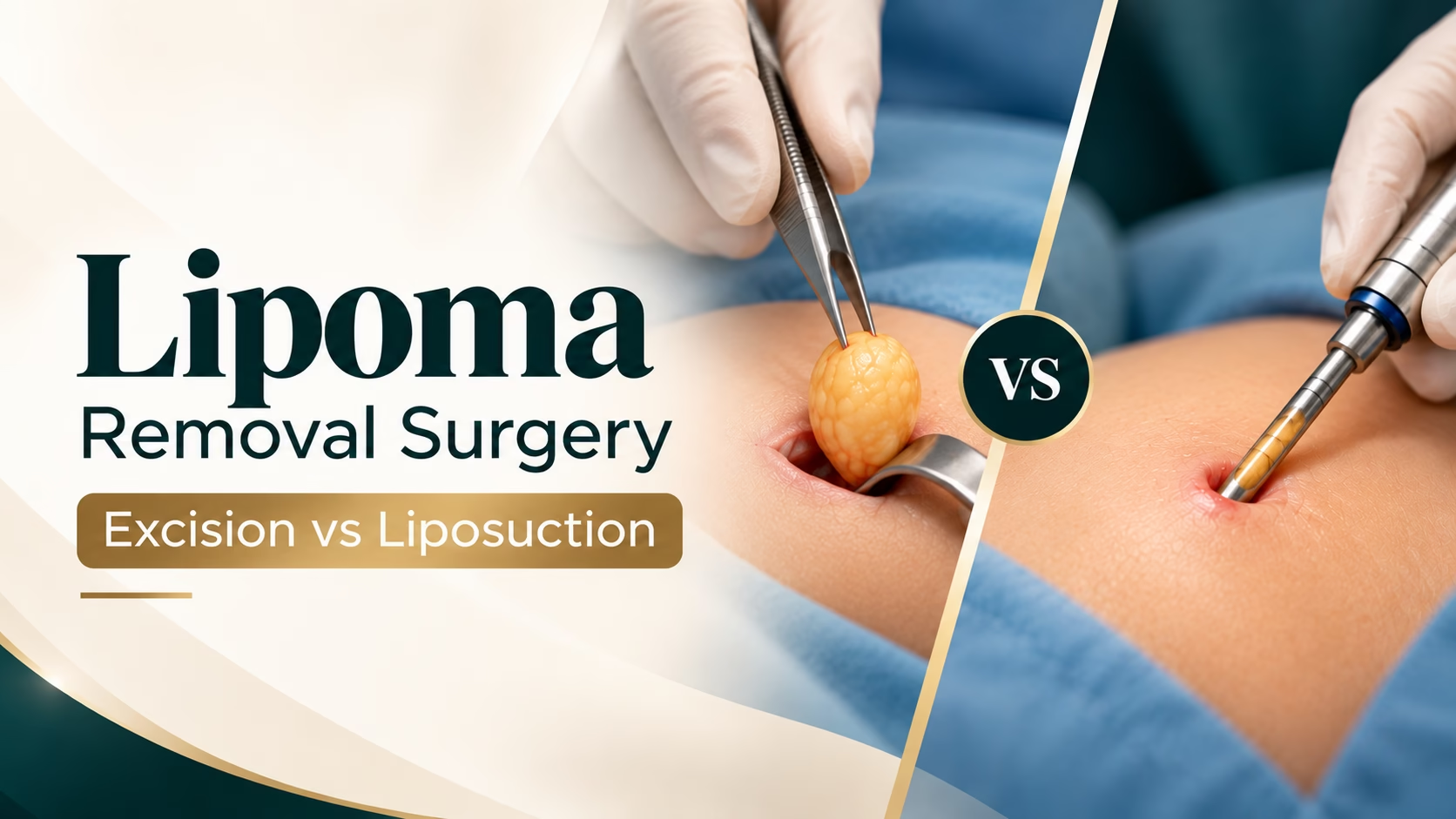
A lipoma is a common benign growth made up of fatty tissue. It usually develops slowly beneath the skin and may feel soft or rubbery when touched. Many lipomas do not require treatment, but removal may be considered when a lump becomes uncomfortable, grows, affects appearance or causes concern.
When removal is appropriate, patients may hear about two different approaches: surgical excision and liposuction-assisted removal.
So, which technique is better?
There is no single answer that applies to every lipoma. The appropriate technique depends on factors such as the size and location of the lipoma, its depth, its characteristics and whether there is a defined capsule around it.
If you are considering lipoma removal surgery in Mumbai, understanding the difference between these techniques can help you have a more informed discussion with your surgeon.
What Is a Lipoma?
A lipoma is a non-cancerous growth of mature fat cells that develops beneath the skin.
Lipomas are often:
- Soft or rubbery to the touch
- Movable beneath the skin
- Slow-growing
- Usually painless
- Located on areas such as the back, shoulders, arms, thighs, neck or trunk
Most lipomas are harmless and may not require treatment.
However, not every lump beneath the skin is necessarily a lipoma. A new, rapidly growing, painful, firm or unusual lump should be assessed by a qualified medical professional rather than being self-diagnosed.
If you already have a diagnosed or suspected lipoma, you can also read our guide on when a lipoma may need to be removed to understand when treatment may be considered.
What Is Lipoma Excision?
Excision is a surgical technique used to remove a lipoma through an incision.
During the procedure, the surgeon makes an incision over or near the lipoma and carefully removes the fatty mass. Where appropriate, the surrounding capsule may also be addressed.
The incision is then closed using suitable wound-closure techniques.
Why Is Excision Commonly Used?
Excision may be particularly useful when the lipoma is well-defined, encapsulated or requires direct surgical access.
It may be considered when:
- The lipoma is well-defined
- The lesion has a distinct capsule
- Complete removal is important
- The lipoma is relatively superficial
- Its location allows safe surgical access
- The surgeon wants direct visual access to the mass
One advantage of excision is that the surgeon can directly see the lesion during removal.
When clinically appropriate, the removed tissue can also be sent for pathological examination.
What Is Liposuction for Lipoma Removal?
Liposuction-assisted removal uses a small access point and a cannula to remove fatty tissue through suction.
Instead of removing the lipoma through a larger opening, the surgeon may use a smaller access point to extract the fatty tissue.
This technique can be considered in selected cases, but it is not suitable for every lipoma.
The decision depends on the characteristics of the lesion and the surgeon’s assessment.
Lipoma Excision vs Liposuction: What Is the Difference?
Although both approaches aim to remove fatty tissue, they work differently.
With excision, the lipoma is surgically removed through an incision. This allows the surgeon to directly visualise the mass and carefully remove it. The size of the incision depends on factors such as the size and location of the lipoma.
With liposuction, a cannula is used to remove fatty tissue through suction. Because this technique uses a smaller access point, it may result in a smaller visible opening in selected cases. However, it does not provide the same direct access to the entire mass as conventional excision.
The capsule surrounding a lipoma can also be an important consideration. With surgical excision, the surgeon can directly address the capsule when appropriate. With liposuction, dealing with the capsule may be more difficult depending on the characteristics of the lesion.
Excision may therefore be particularly useful for well-defined or encapsulated lipomas, while liposuction may be considered for selected fatty lesions where the technique is appropriate.
Scarring is another consideration. Excision requires an incision, so the resulting scar depends on the size and location of the incision as well as individual healing. Liposuction generally uses smaller access points, which may result in less visible scarring in selected cases. However, a smaller access point does not guarantee an invisible scar.
The ability to examine the removed tissue may also influence the choice of technique. With excision, the complete mass can be removed and, when clinically appropriate, sent for pathological examination. With liposuction, tissue retrieval and examination depend on the specific technique and clinical circumstances.
Ultimately, neither technique is universally better. The most appropriate approach depends on the individual lipoma and the patient’s requirements.
When Is Excision Usually Preferred?
Excision may be preferred when the surgeon needs direct access to the mass or when complete removal of a defined lesion is important.
It may be considered for:
- Well-circumscribed lipomas
- Encapsulated lipomas
- Larger or deeper lesions
- Lipomas in areas where precise removal is important
- Lesions where tissue diagnosis may be clinically appropriate
The exact approach should be determined after examining the lump.
When Can Liposuction Be Considered?
Liposuction may be considered for selected fatty lesions where a smaller access point could be beneficial.
Potential advantages in appropriate cases may include:
- A smaller skin opening
- Less disruption of the overlying skin
- Potentially less visible scarring
However, a smaller incision does not automatically mean that liposuction is the better option.
If the lesion has a capsule or other characteristics that make direct removal important, excision may be more appropriate.
Does Liposuction Leave Less Scarring?
One reason some patients ask about liposuction is the possibility of smaller scars.
Because liposuction can use a small access point, the resulting scar may be less noticeable than the incision required for conventional excision in selected cases.
However, scar appearance depends on several factors, including:
- Size of the lipoma
- Location
- Skin characteristics
- Surgical technique
- Wound healing
- Individual tendency to form prominent scars
Therefore, a smaller incision does not guarantee an invisible or scar-free result.
Is Lipoma Excision Painful?
Lipoma removal may be performed using local anaesthesia for suitable smaller procedures. The anaesthetic approach depends on factors such as the size, location and complexity of the lesion.
During the procedure, the treated area is numbed, so patients generally should not experience sharp surgical pain.
Some soreness, swelling or tenderness may occur after the procedure.
Your surgeon will explain the expected recovery and pain-management plan based on your specific procedure.
How Long Does Recovery Take After Lipoma Removal?
Recovery varies from patient to patient.
Factors that can influence recovery include:
- Size of the lipoma
- Location
- Removal technique
- Depth of the lesion
- Number of lesions treated
- Type of wound closure
- Individual healing
A small procedure may allow a relatively quick return to routine activities, while a larger or deeper lipoma may require more recovery time.
Your surgeon will provide specific instructions regarding wound care, bathing, exercise and follow-up.
Can a Lipoma Come Back After Removal?
A completely removed lipoma generally does not return at the same site.
However, a person who develops one lipoma may develop another lipoma elsewhere.
Recurrence can also depend on whether the entire lesion was removed.
This is one reason why the removal technique should be selected according to the characteristics of the individual lesion rather than simply choosing the procedure with the smallest incision.
Should Every Lipoma Be Removed?
No. Many lipomas do not require treatment.
Removal may be considered when:
- The lump is painful or uncomfortable
- It interferes with movement or daily activities
- It continues to increase in size
- It causes cosmetic concern
- Its diagnosis is uncertain
- Your doctor recommends removal for clinical reasons
If you have noticed a new or changing lump, it is better to have it evaluated rather than assuming that it is a lipoma.
How Is the Right Lipoma Removal Technique Chosen?
During a consultation, your surgeon may assess several factors before recommending a technique.
Size of the Lipoma
The size of the lesion can influence the surgical approach. A small superficial lipoma may require a different approach from a larger lesion.
Location
The location of the lipoma can influence how the surgeon accesses it and where an incision may be placed.
Depth
A lipoma located deeper beneath the skin may require more careful surgical planning.
Capsule
If the lipoma has a defined capsule, the surgeon may consider whether excision provides a more appropriate method of removal.
Symptoms
Pain, pressure, restricted movement or other symptoms may influence the decision to remove the lesion.
Cosmetic Considerations
For lipomas located on visible areas of the body, the expected scar and cosmetic outcome may be an important part of treatment planning.
Clinical Assessment
If there is uncertainty about the nature of the lump, additional evaluation may be recommended before deciding on treatment.
Lipoma Removal in Mumbai: What Should You Ask Your Surgeon?
If you are considering lipoma removal surgery in Mumbai, you can discuss several important questions during your consultation.
You may want to ask:
- Is the lump consistent with a lipoma?
- Does it need to be removed?
- Which removal technique is appropriate for me?
- Would excision or liposuction be more suitable?
- Where would the incision be placed?
- What type of scar should I expect?
- Will the removed tissue be sent for pathological examination?
- How long should I plan for recovery?
- When can I return to exercise?
- What wound-care instructions will I need to follow?
- Is there a possibility of recurrence?
A consultation allows the surgeon to assess the specific characteristics of your lipoma rather than selecting a procedure based only on general information.
Lipoma Excision or Liposuction: Which Is Better?
There is no single technique that is best for every lipoma.
Excision provides direct access to the lesion and may be particularly useful when the lipoma is well-defined, encapsulated or requires complete surgical removal.
Liposuction may be considered in selected cases where a smaller access point is desirable and the characteristics of the lesion make the technique appropriate.
The best option depends on the individual patient, the characteristics of the lump and the surgeon’s assessment.
If you are unsure which approach may be suitable, discuss your options with a qualified plastic surgeon after an examination.
Lipoma Removal Surgery in Mumbai with Dr. Kunal Sayani
Dr. Kunal Sayani, MBBS, MS, MCh, DrNB (Plastic Surgery), provides surgical evaluation and treatment for patients considering removal of lipomas and other benign soft-tissue lumps.
The appropriate surgical technique is selected based on factors such as the location, size, characteristics and individual requirements of the patient rather than using the same approach for every case.
You can learn more about lipoma removal surgery and understand the treatment options available.
For patients looking for a plastic surgeon in Mumbai, Tvameva Aesthetics is located in Vile Parle West, Mumbai.
Frequently Asked Questions
What is the difference between lipoma excision and liposuction?
Excision removes the lipoma through a surgical incision, while liposuction uses a cannula and suction to remove fatty tissue through a smaller access point. The appropriate technique depends on the characteristics of the individual lipoma.
Is liposuction better than excision for lipoma removal?
Not necessarily. Liposuction may provide a smaller access point in selected cases, while excision may be more appropriate when direct removal of a defined or encapsulated lesion is preferred.
Does lipoma removal leave a scar?
Yes, lipoma removal can leave a scar. The size and appearance depend on the surgical technique, size and location of the lipoma, skin characteristics and individual healing.
Can a lipoma be removed without surgery?
Lipomas generally do not disappear on their own. When removal is required, a procedure may be recommended depending on the diagnosis and characteristics of the lesion.
Can lipomas grow back after removal?
A completely removed lipoma generally does not return at the same site, although new lipomas can develop elsewhere.
How long does lipoma removal take?
The duration varies depending on the size, location and number of lipomas and the technique used. Your surgeon can provide a more accurate estimate after examining the lesion.
Can I exercise after lipoma removal?
The timing of returning to exercise depends on the location and extent of the procedure. Your surgeon will advise you when specific activities can be resumed safely.
Should every lump be treated as a lipoma?
No. Although lipomas are common, other types of lumps can occur under the skin. A new, rapidly growing, painful, firm or unusual lump should be medically assessed.
Book a Consultation for Lipoma Removal in Mumbai
If you have a lipoma that is painful, increasing in size, affecting your daily activities or causing cosmetic concern, a consultation can help determine whether removal is appropriate.
Dr. Kunal Sayani can assess the lump and discuss whether excision, liposuction or another approach may be suitable based on your individual situation.
Tvameva Aesthetics is located in Vile Parle West, Mumbai.
You can learn more about Lipoma Removal Surgery or visit the official Google Maps location.
Leave a Reply