
Changes in body weight, ageing, pregnancy and natural variations in anatomy can affect the volume and contour of different areas of the body. Some people may wish to restore lost volume or improve specific contours without relying entirely on synthetic implants or fillers.
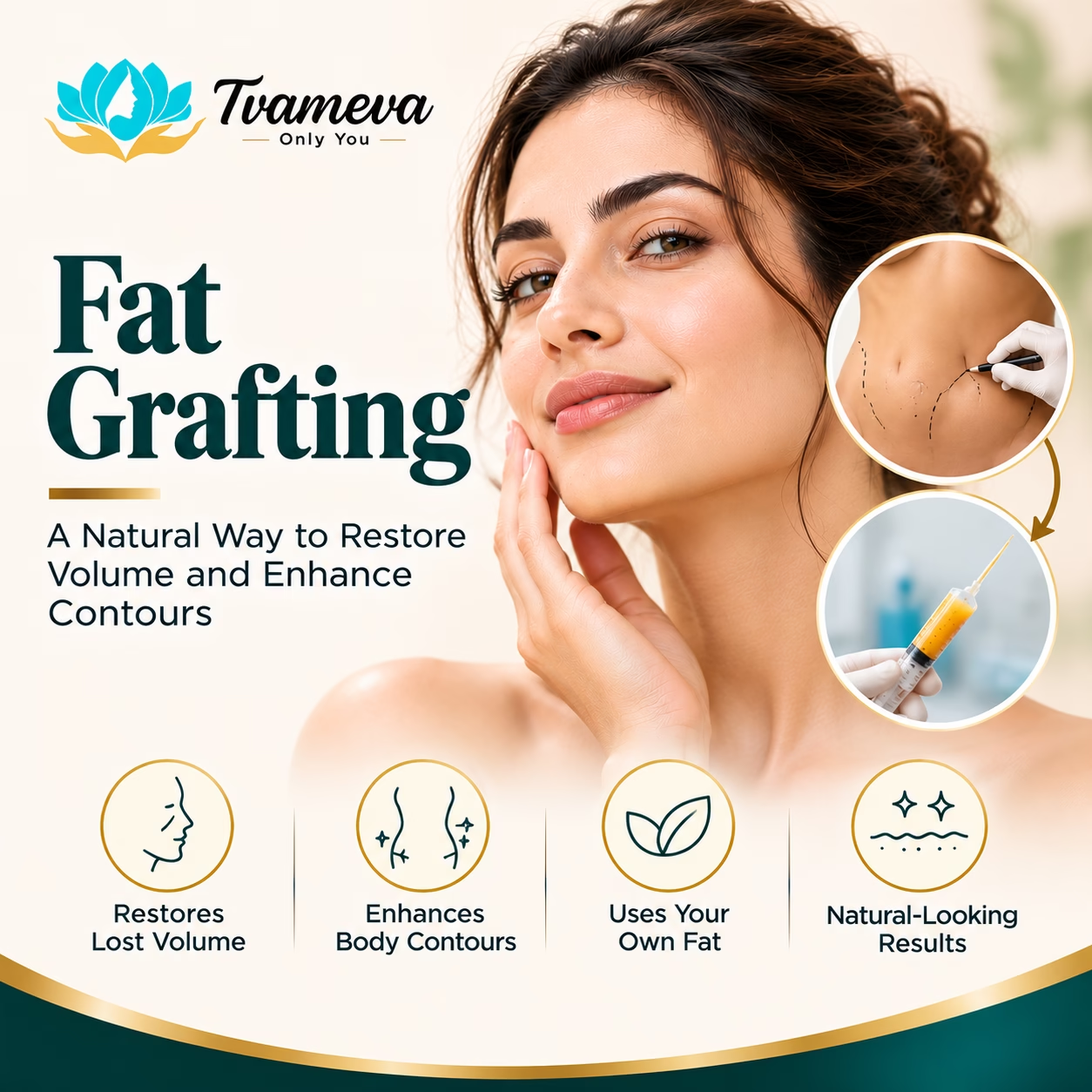
One surgical option that may be considered in selected cases is fat grafting, also known as fat transfer or autologous fat transfer. The procedure uses a patient’s own fat, collected from one area of the body and transferred to another area where additional volume or contour improvement is desired.
Although the concept sounds straightforward, fat grafting involves careful surgical planning, precise fat harvesting, processing and placement. Not all transferred fat survives, and the final outcome can vary depending on individual anatomy, technique and healing.
This guide explains how fat grafting works, where it may be used, what happens during the procedure, its potential benefits, limitations, risks and recovery.
What Is Fat Grafting?
Fat grafting is a surgical procedure in which fat is collected from one part of the body, processed to remove unwanted fluid and impurities, and carefully transferred to another area.
The fat comes from the patient’s own body. For this reason, the procedure is also called autologous fat transfer.
For example, a surgeon may collect fat from the abdomen, waist or thighs and use a portion of the prepared tissue to add volume to another selected area.
Fat grafting has two main objectives:
- To reduce unwanted localised fat deposits in the donor area.
- To restore or add volume in the recipient area.
It is important to understand that fat grafting is not a weight-loss procedure. It is generally performed to improve selected contours or address localised volume deficiency.
How Does the Fat Grafting Procedure Work?
Fat grafting involves three important stages: fat harvesting, fat processing and fat transfer.
1. Fat Harvesting
The first step is collecting fat from a suitable donor area.
Common donor areas may include:
- Abdomen
- Waist and flanks
- Thighs
- Hips
The surgeon selects the donor site after evaluating the patient’s fat distribution, body proportions and treatment goals.
Small incisions are generally made, and a specialised cannula is used to collect fat using a controlled liposuction technique.
The aim is to collect suitable fat while minimising unnecessary trauma to the surrounding tissues.
2. Fat Processing and Preparation
The harvested fat cannot always be transferred directly without preparation.
It is processed using a technique selected by the surgeon. Depending on the method, this may involve filtration, washing, settling or centrifugation.
The purpose is to separate the usable fat tissue from unwanted components such as excess fluid, blood and oil.
Proper handling is important because the quality of the prepared tissue can influence graft survival.
3. Fat Injection and Placement
Once prepared, the fat is transferred into the selected recipient area using specialised injection cannulas.
The surgeon places small amounts of fat in multiple tissue planes rather than depositing a large quantity in one location.
This approach is intended to support contact between the transferred fat and the surrounding tissue, which helps the graft receive the blood supply it needs.
The amount of fat transferred depends on the treatment area, available donor fat, tissue capacity and individual surgical plan.
Where Can Fat Grafting Be Used?
Fat grafting has several established applications in plastic and reconstructive surgery. The appropriate use depends on the patient’s anatomy, medical history, surgical indication and the surgeon’s assessment.
1. Breast Fat Grafting
One application is breast augmentation using a patient’s own fat.
In selected patients, fat transfer may be considered to add a modest amount of breast volume or improve contour.
It may be discussed by people who:
- Prefer an option using their own tissue.
- Want a relatively modest increase in breast volume.
- Have suitable donor fat.
- Want to address selected contour irregularities.
However, fat transfer does not provide the same predictable volume increase as breast implants. Some of the transferred fat is naturally reabsorbed, and the amount of enlargement achievable is limited by the patient’s anatomy and tissue capacity.
For a broader understanding of breast enlargement options, read the Breast Augmentation vs Breast Lift guide.
You can also explore the clinic’s Breast Surgery service page, which explains breast augmentation and other breast procedures.
2. Facial Fat Grafting
In plastic and reconstructive surgery, fat transfer may be used in selected cases to restore volume in areas of the face.
Potential areas include:
- Cheeks
- Temples
- Selected areas around the face
- Certain areas affected by volume loss or contour irregularities
Facial fat grafting requires careful assessment because the face contains delicate anatomical structures. The technique and amount of fat used must be planned according to the specific area.
This is a general application of fat grafting and should not be interpreted as confirmation that every facial fat-transfer procedure is offered at a particular clinic.
3. Fat Grafting for Selected Contour Irregularities
In some reconstructive or aesthetic situations, fat transfer may be considered to improve localised depressions, asymmetry or contour irregularities.
The suitability of this approach depends on the underlying cause of the irregularity and the quality of the surrounding tissues.
A physical examination is necessary before deciding whether fat grafting is appropriate.
What Are the Potential Benefits of Fat Grafting?
Fat grafting may offer several benefits in appropriately selected patients.
Uses the Patient’s Own Fat
The procedure uses tissue collected from the patient’s own body rather than relying entirely on an implanted material.
However, using one’s own fat does not eliminate the possibility of complications or guarantee that all transferred fat will survive.
Can Address Two Areas in One Surgical Plan
Fat is collected from a donor area and transferred to another location.
This means the procedure may address localised fat deposits in one area while adding volume to another.
Can Provide Natural Tissue Volume
When transferred fat survives, it becomes part of the surrounding tissue. The treated area may develop a softer contour compared with some other volume-enhancement methods.
Can Be Planned Around Individual Anatomy
The surgeon can plan the donor and recipient areas according to the patient’s body structure, available fat and desired outcome.
Not every patient will experience the same degree of improvement. Results depend on several individual factors.
How Much of the Transferred Fat Survives?
One of the most important aspects of fat grafting is fat survival.
Not all transferred fat cells establish a lasting blood supply. Some of the injected fat is naturally reabsorbed by the body during the healing process.
The amount that survives can vary depending on:
- The quality of the harvested fat.
- How the fat is collected and processed.
- The technique used for transfer.
- The amount placed in each tissue layer.
- Blood supply in the recipient area.
- The patient’s healing response.
- Post-operative care and changes in body weight.
This is why the final volume may be different from the immediate appearance after surgery.
The surgeon should explain that early swelling and transferred volume do not represent the final result. It takes time for the tissues to settle and for the surviving fat to stabilise.
Some patients may require more than one procedure to achieve their desired outcome. This cannot be determined without an individual assessment.
Who May Be a Suitable Candidate for Fat Grafting?
Fat grafting may be considered for individuals who:
- Are in generally good health.
- Have sufficient fat available in suitable donor areas.
- Have a specific and realistic volume-enhancement goal.
- Understand that some transferred fat may not survive.
- Can follow the recommended recovery instructions.
- Have realistic expectations about the amount of change possible.
A detailed consultation is important before proceeding.
Who May Not Be Suitable?
Fat grafting may not be appropriate for everyone.
Additional evaluation or an alternative treatment may be necessary for people who:
- Have insufficient donor fat.
- Have certain uncontrolled medical conditions.
- Have active infections.
- Have medical or surgical factors that increase operative risk.
- Expect a dramatic increase in volume from a limited amount of available fat.
- Are unable to follow post-operative instructions.
Suitability is determined individually rather than through a fixed checklist alone.
Fat Grafting vs Breast Implants: Understanding the Difference
Fat transfer and breast implants are two different approaches to breast augmentation. Neither is universally better.
Fat grafting:
- Uses the patient’s own fat.
- Requires a suitable donor area.
- Usually provides a more limited increase in breast volume.
- Has variable fat survival.
- Does not involve placing a breast implant.
Breast implants:
- Use a medical implant to increase breast volume.
- Offer a more predictable planned increase in size.
- Do not require fat harvesting from another body area.
- Have implant-specific considerations, including possible future monitoring or additional surgery.
The choice depends on the desired volume, breast anatomy, available donor fat, skin quality, medical history and personal preferences.
For a more detailed comparison of augmentation and lifting options, see the breast augmentation and breast lift article.
What Happens Before Fat Grafting Surgery?
Preparation begins with a consultation and medical evaluation.
During the consultation, the surgeon may:
- Understand the patient’s concerns and desired outcome.
- Examine the proposed donor and recipient areas.
- Assess the amount and distribution of available fat.
- Review medical history and previous surgeries.
- Discuss medications, allergies and relevant health conditions.
- Explain the expected outcome and limitations.
- Discuss the possible risks and recovery requirements.
Depending on the treatment area and the patient’s medical history, additional investigations may be recommended.
Patients should disclose all medications, supplements, smoking or nicotine use and relevant medical conditions. They should not stop prescribed medicines without medical advice.
The surgeon will provide specific instructions about fasting, medication adjustments and preparation if surgery is planned.
What Is Recovery Like After Fat Grafting?
Recovery varies according to the donor area, recipient area, amount of fat transferred and whether other procedures are performed at the same time.
There are generally two areas to consider during recovery: the area from which fat was collected and the area where fat was transferred.
First Few Days
Patients may experience:
- Swelling
- Bruising
- Tenderness
- Mild to moderate discomfort
- Temporary changes in skin sensation
These symptoms can occur in both the donor and recipient areas.
The surgeon may recommend prescribed medication, dressings or compression garments depending on the procedure.
First Few Weeks
Swelling and bruising generally begin to settle gradually.
Patients should follow instructions regarding:
- Physical activity
- Wound care
- Compression garments, if prescribed
- Sleeping position, when relevant
- Pressure on the treated area
- Follow-up appointments
The timing of returning to work, exercise and normal activities depends on the extent of surgery and individual healing.
Longer-Term Healing
The treated area may initially appear fuller because of swelling and the volume of transferred fat.
As healing progresses, some fat is reabsorbed. The remaining volume gradually stabilises.
It may take several months to assess the more settled result. The surgeon will advise when it is appropriate to evaluate the outcome.
What Are the Risks and Possible Complications of Fat Grafting?
Fat grafting is a surgical procedure and carries risks. The exact risk profile depends on the treatment area, the patient’s health and the surgical technique.
Possible complications include:
- Bleeding
- Infection
- Bruising and prolonged swelling
- Pain or tenderness
- Changes in skin sensation
- Uneven contour
- Asymmetry
- Fat absorption leading to reduced volume
- Fat necrosis, where some transferred fat tissue does not survive
- Formation of oil cysts or areas of calcification
- Irregularities at the donor site
- Need for additional correction or repeat surgery
- Anaesthesia-related complications
The specific risks can differ depending on where fat is transferred. Breast fat grafting, for example, requires appropriate clinical and imaging considerations.
Patients should discuss the potential benefits, limitations and complications with their plastic surgeon before making a decision.
Does Fat Grafting Give Permanent Results?
Fat grafting can provide long-lasting volume when transferred fat successfully establishes a blood supply and survives.
However, it is important to distinguish between surviving fat and the temporary volume present immediately after surgery.
The body reabsorbs some of the transferred fat during healing. The fat that survives may remain for a long time, but it can still respond to future changes in body weight and ageing.
Significant weight gain or weight loss may affect the appearance of the treated area.
Therefore, fat grafting should not be considered a guaranteed permanent-volume procedure.
Fat Grafting and Liposuction: Are They the Same?
Although both procedures may involve the removal of fat through small incisions, their objectives are different.
Liposuction removes unwanted localised fat deposits to improve body contour.
Fat grafting collects fat from a donor area, prepares it and transfers it to another area where additional volume may be desired.
In some surgical plans, fat harvesting may involve a liposuction technique. However, the purpose of the overall procedure is different.
You can read more about liposuction and tummy tuck surgery in Mumbai to understand the difference between fat removal and abdominal skin or muscle correction.
How Much Does Fat Grafting Cost in Mumbai?
The cost of fat grafting depends on the specific procedure and the complexity of the surgical plan.
Factors that may influence the cost include:
- The area being treated.
- The amount of fat that needs to be harvested.
- The number of donor areas involved.
- The complexity of fat processing and transfer.
- Anaesthesia and facility requirements.
- Whether another procedure is performed at the same time.
- Follow-up and post-operative care requirements.
There is no single cost that applies to every patient.
An individual consultation and assessment are necessary to understand the treatment plan and obtain an appropriate estimate.
Choosing a Plastic Surgeon for Fat Grafting
Choosing a qualified plastic surgeon is an important part of planning any fat-transfer procedure.
Patients should consider:
- Appropriate recognised qualifications in plastic surgery.
- Experience with the specific procedure being considered.
- Understanding of donor and recipient site anatomy.
- Clear communication about realistic outcomes.
- Discussion of complications and limitations.
- Appropriate surgical and anaesthesia facilities.
- A structured post-operative follow-up plan.
It is also important to ask how the surgeon evaluates fat survival, manages complications and decides whether additional treatment may be necessary.
You can learn more about Dr. Kunal Sayani and his surgical qualifications.
Is Fat Grafting the Right Choice for You?
Fat grafting may be an option for selected patients who want to restore volume or improve specific contours using their own fat.
However, the procedure is not suitable for every concern. The amount of available donor fat, the recipient area’s tissue capacity, the desired change and individual health factors all influence the decision.
For breast augmentation in particular, fat transfer may be suitable for some patients seeking a modest increase in volume, while others may be better suited to implants or another approach.
The most appropriate option can only be determined after a detailed consultation and physical assessment.
Frequently Asked Questions About Fat Grafting
1. Is fat grafting the same as fat transfer?
Yes. Fat grafting, fat transfer and autologous fat transfer generally refer to the process of collecting fat from one area of the patient’s body, processing it and transferring it to another area.
2. Is fat grafting a major surgery?
The extent of surgery depends on the treatment area, amount of fat harvested and amount transferred. It may involve anaesthesia, small incisions and a period of recovery. The surgeon will explain the expected surgical requirements for the individual case.
3. How long does fat grafting take?
The duration depends on the donor area, recipient area, amount of fat involved and whether other procedures are combined. A specific duration can be estimated after surgical planning.
4. Does all transferred fat survive?
No. Some of the transferred fat is naturally reabsorbed during healing. The amount that survives varies between patients and depends on several surgical and biological factors.
5. Can fat grafting increase breast size?
Fat transfer may provide a modest increase in breast volume in selected patients. The achievable change is limited by available donor fat, breast tissue capacity and the amount of fat that survives.
6. Is fat grafting better than breast implants?
Neither option is better for everyone. Fat transfer uses the patient’s own tissue and generally offers a more limited volume increase. Implants provide a more predictable increase in volume but involve an implanted device. The suitable option depends on individual anatomy and expectations.
7. Does fat grafting leave scars?
Small incisions are required for fat harvesting and injection. These generally leave small scars, but their visibility depends on incision placement, healing and individual skin characteristics.
8. How long does recovery take after fat grafting?
Recovery varies according to the treated area and extent of surgery. Swelling, bruising and tenderness may take time to settle. The surgeon will provide instructions about activity, wound care and follow-up.
9. Can fat grafting be repeated?
In selected cases, an additional session may be considered if the desired volume is not achieved or if further correction is needed. The decision depends on the remaining tissue, available donor fat and the patient’s overall suitability.
10. Is fat grafting safe?
Fat grafting can be performed safely in appropriately selected patients by a qualified surgeon using suitable techniques and facilities. However, no surgical procedure is completely risk-free. Patients should understand the potential complications before proceeding.
Consult a Plastic Surgeon in Mumbai
If you are exploring fat transfer as an option for breast augmentation or another suitable surgical concern, a personalised assessment can help clarify what the procedure may realistically achieve.
Dr. Kunal Sayani is a Plastic & Aesthetic Surgeon based in Vile Parle West, Mumbai. During a consultation, you can discuss your goals, available treatment options, expected outcomes, limitations and potential risks.
To discuss your concerns or arrange an appointment, visit the contact page.
The right treatment should be based on your anatomy, health and expectations-not simply on the popularity of a procedure.
Leave a Reply