
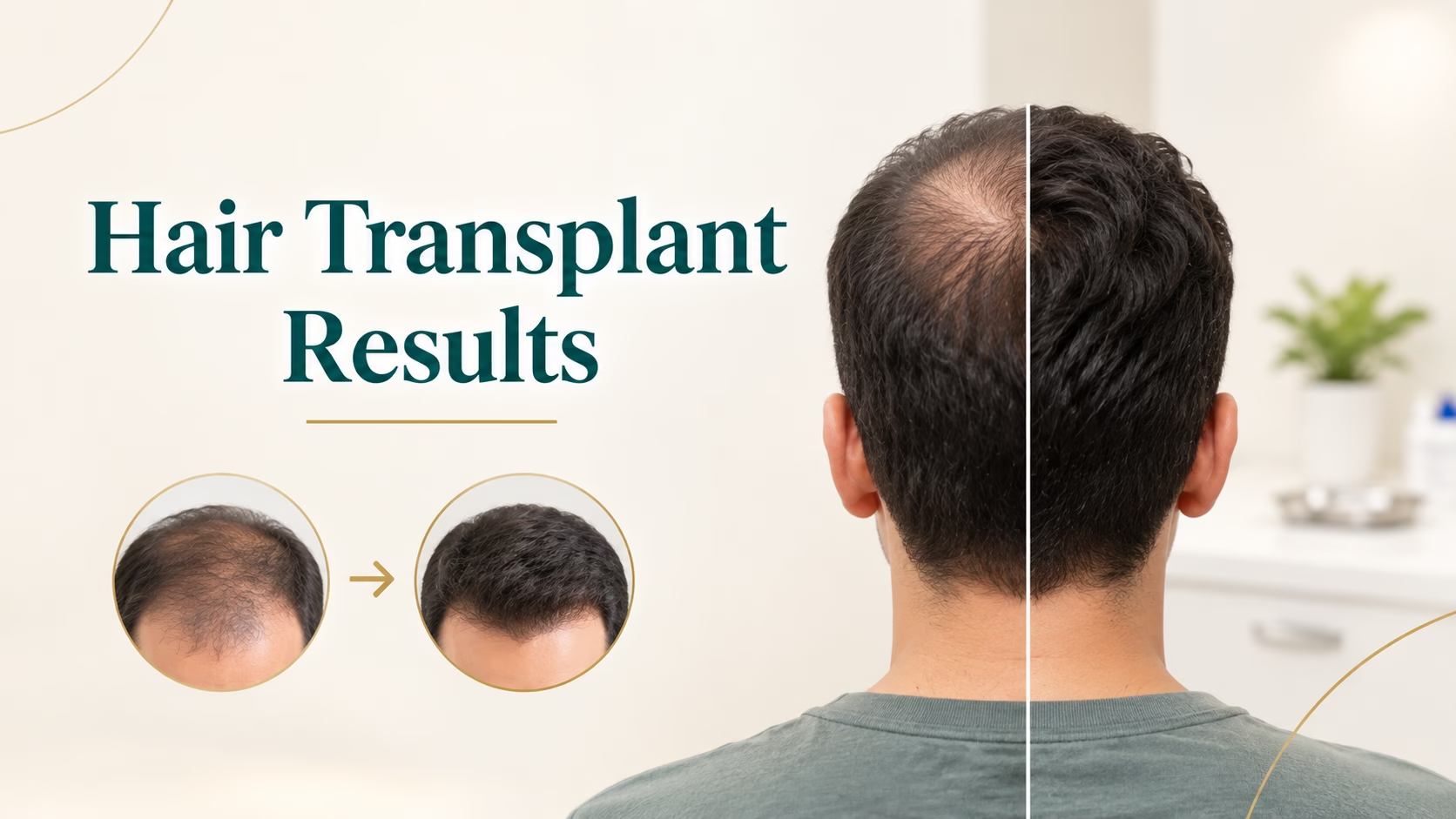
One of the most common questions people ask before a hair transplant is:
“When will I actually see new hair?”
Unlike a haircut or a cosmetic treatment with an immediate visible change, hair transplantation is a gradual process. The transplanted follicles need time to settle, heal and enter their normal growth cycle.
It is also common for some of the visible transplanted hair shafts to shed during the early period after surgery. This can be confusing for patients who expect the transplanted hairs to continue growing immediately.
Understanding the typical hair transplant results timeline can help you set realistic expectations.
The exact pace of growth varies from person to person and depends on factors such as the patient’s hair characteristics, surgical technique, healing, graft characteristics and the extent of hair loss.
What Happens After a Hair Transplant?
During a hair transplant, hair follicles are taken from a donor area and placed into areas affected by thinning or hair loss.
The transplanted follicles then need to establish themselves in their new location.
The visible hair shaft that comes with a transplanted follicular unit does not necessarily continue growing immediately after surgery.
Instead, the early period involves healing and changes in the hair-growth cycle.
This is why the appearance of the scalp shortly after surgery should not be considered an indication of the final result.
For patients who want to understand how surgeons determine the number of grafts required, our existing guide explains how many grafts you may need for a hair transplant in Mumbai.
Hair Transplant Results Timeline
Every patient heals differently, so the timeline should be treated as a general guide rather than a guaranteed schedule.
First Few Days After Hair Transplant
During the first few days, the main priority is healing.
You may notice:
- Redness
- Mild swelling
- Small crusts around the grafts
- Tenderness or tightness
- Temporary sensitivity
- Changes in the appearance of the transplanted area
Your surgeon will provide specific instructions about washing, sleeping, medications and activity.
The transplanted hairs may initially be visible, but this does not mean that the final growth has started.
1–2 Weeks After Hair Transplant
During the first couple of weeks, the scalp continues healing.
Small crusts around the transplanted follicles gradually loosen and disappear.
The appearance of the recipient area may change significantly during this period.
Some patients may feel that the transplanted area looks less impressive than they expected.
This is normal because the final hair-growth process has not yet occurred.
Avoid judging the success of the procedure at this stage.
2–6 Weeks: The Shedding Phase
One of the most confusing parts of hair transplant recovery is post-transplant shedding.
The visible hair shafts attached to transplanted follicles may fall out during the early weeks following surgery.
This can make it appear as though the transplant has stopped working.
However, shedding of the visible hair shaft does not necessarily mean that the transplanted follicle has been lost.
The follicle can remain beneath the skin and subsequently enter a new growth cycle.
The American Society of Plastic Surgeons notes that patients may be surprised when transplanted hair falls out during the early period after surgery and that this shedding can be temporary.
2–3 Months: Early Regrowth May Begin
After the initial shedding phase, new growth can gradually begin.
Some patients may notice small, fine hairs appearing in the transplanted areas.
At first, these hairs may be:
- Fine
- Light
- Uneven
- Short
- Less dense than expected
This does not necessarily represent the final appearance.
Early regrowth is only one stage of the process.
Some patients notice growth earlier while others take longer.
3–4 Months: Early Visible Hair Growth
Around this stage, some patients may begin seeing more noticeable new growth.
The change can still be relatively subtle.
The newly growing hairs may initially appear thinner than the surrounding established hair.
It is important not to compare your growth with photographs of another patient at exactly the same number of months.
Hair growth cycles differ between individuals.
ASPS patient information describes hair growth as gradual, with regrowth beginning after the early shedding period.
4–6 Months: Increasing Visible Coverage
During the following months, the transplanted area may begin showing more visible improvement.
The hairs can gradually become:
- Longer
- Thicker
- More pigmented
- More noticeable
- Better integrated with existing hair
However, density is still developing.
Some areas may appear to grow faster than others.
This is particularly relevant when larger areas of the scalp have been treated.
6–9 Months: Noticeable Improvement
For many patients, this is the period when the improvement becomes increasingly noticeable.
The transplanted hairs continue to grow and mature.
You may begin seeing better:
- Coverage
- Hairline definition
- Frontal density
- Blending with existing hair
- Overall scalp coverage
However, the result may still continue improving.
It is important not to assume that the appearance at six months represents the final outcome.
9–12 Months: Continued Maturation
Between approximately nine and twelve months, many patients see further improvement in the appearance of transplanted hair.
The hair may continue becoming thicker and more natural-looking.
The final appearance is influenced by:
- Number of surviving grafts
- Hair calibre
- Follicular-unit characteristics
- Placement
- Hair direction
- Existing hair
- Donor characteristics
- Individual growth cycle
The amount of improvement varies between patients.
12–18 Months: Assessing the Mature Result
Hair transplantation is a long-term process.
For many patients, the final result is assessed around the one-year mark or later, depending on the procedure and individual growth.
Some patients may continue seeing maturation beyond 12 months.
ASPS educational material notes that final hair-restoration results can take approximately 12–18 months to become apparent, although individual timelines vary.
This is why patients should avoid making premature judgments based on the first few months.
Why Does Hair Transplant Growth Take So Long?
Hair follicles naturally move through different growth phases.
After transplantation, the follicles also need to recover from the surgical process and adapt to their new location.
The visible hair shaft and the underlying follicle should therefore not be thought of as exactly the same thing.
A patient may temporarily lose the visible hair while the follicle remains capable of producing a new hair during a later growth cycle.
This explains why a hair transplant can appear relatively unchanged for a period before gradual regrowth becomes noticeable.
Is Hair Shedding After a Hair Transplant Normal?
Temporary shedding can occur after hair transplantation.
This can involve transplanted hairs and, in some cases, existing hair around the treatment area.
The early shedding phase can be emotionally difficult because patients may interpret it as treatment failure.
However, early shedding does not automatically mean the transplanted follicles have been lost.
If you are concerned about excessive shedding, unusual scalp changes or unexpected symptoms, contact your surgical team rather than trying to diagnose the situation yourself.
Why Does One Area Grow Faster Than Another?
Hair does not necessarily grow at exactly the same rate across the entire transplanted area.
Differences can occur because of:
- Follicular characteristics
- Hair calibre
- Existing hair density
- Recipient-area characteristics
- Individual growth cycles
- Healing differences
- Distribution of grafts
The frontal scalp may therefore appear different from the crown during the same stage of recovery.
A gradual and uneven-looking improvement does not automatically indicate a poor result.
When Will the Hairline Start Looking Natural?
The hairline is one of the most visually important parts of a transplant.
Early after surgery, the transplanted hairs may appear sparse, short or uneven.
As the hairs grow and mature, their direction, thickness and distribution become more apparent.
Natural-looking hairline design depends on more than the number of grafts.
It also involves:
- Hair direction
- Angle
- Density
- Facial proportions
- Existing hair
- Age
- Future hair-loss pattern
This is why graft planning and hairline design should be considered together.
When Will Crown Hair Start Growing?
The crown can be more difficult to assess because the hair naturally follows a whorl pattern.
The crown may also require a substantial number of grafts depending on the size of the thinning area.
Because of its shape and growth direction, the visual improvement may develop differently from frontal hair transplantation.
A patient should therefore not assume that the crown and hairline will show identical growth timelines.
Does More Graft Count Mean Faster Results?
No.
The number of grafts does not determine how quickly the hair grows.
Growth depends on the behaviour of the transplanted follicles and the patient’s individual healing and hair-growth cycle.
A larger transplant does not automatically produce faster growth.
The objective should be appropriate graft placement and long-term planning rather than simply maximising the number of transplanted grafts.
Does Graft Quality Affect Hair Transplant Results?
The characteristics of the grafts can influence the appearance of the final result.
Important factors can include:
- Follicular-unit composition
- Hair calibre
- Donor density
- Graft handling
- Placement
- Direction
- Angulation
- Distribution
This is one reason why two patients receiving the same number of grafts may not necessarily achieve identical visual density.
Our existing article on how many grafts are needed for a hair transplant in Mumbai explains why graft count should not be considered in isolation.
Can Hair Transplant Results Be Guaranteed?
No.
Hair transplantation is a surgical procedure and outcomes vary between individuals.
Factors influencing results can include:
- Hair-loss pattern
- Donor quality
- Existing hair
- Graft characteristics
- Surgical technique
- Healing
- Future hair loss
- Individual biology
A consultation should therefore focus on realistic expectations rather than guaranteed density or a guaranteed number of new hairs.
What Happens to Your Existing Hair After a Hair Transplant?
A hair transplant does not necessarily stop the progression of your underlying hair-loss condition.
The transplanted follicles may behave differently from non-transplanted hair.
Existing hair can continue to thin over time depending on the underlying cause of hair loss.
This is why long-term planning is important.
A surgeon may need to consider both:
The hair being transplanted today
and
The hair that may continue changing in the future.
Can You Need Another Hair Transplant Later?
Some patients may require or choose additional treatment in the future.
This depends on:
- Extent of hair loss
- Donor availability
- Future progression
- Initial treatment plan
- Desired density
- Response to treatment
However, additional surgery should not be assumed to be necessary for every patient.
The available donor supply is limited, so long-term planning is important before using large numbers of grafts.
What Can Affect Hair Transplant Results?
Several factors can influence the final outcome.
1. Donor Hair Quality
The amount and characteristics of usable donor hair affect what can realistically be achieved.
2. Hair-Loss Pattern
Progressive hair loss can change the appearance around transplanted areas.
3. Hair Characteristics
Hair calibre, texture and colour can influence the visual appearance of density.
4. Graft Placement
Direction, angle and distribution contribute to natural-looking results.
5. Healing
Individual healing varies and can influence the recovery experience.
6. Long-Term Planning
A treatment plan should account for potential future hair loss rather than focusing only on today’s bald or thinning area.
What Should You Do During the Early Recovery Period?
Follow the instructions provided by your surgeon.
Depending on your procedure, instructions may include guidance about:
- Washing
- Sleeping position
- Physical activity
- Sun exposure
- Scalp care
- Medications
- Follow-up appointments
Avoid making changes to your post-operative routine based solely on another patient’s experience.
ASPS recommends following the surgeon’s individual post-operative instructions and attending follow-up visits to assess healing.
When Should You Contact Your Surgeon?
Contact your surgical team if you develop symptoms that concern you, such as:
- Increasing pain
- Significant swelling
- Excessive bleeding
- Fever
- Increasing redness
- Unusual discharge
- Worsening scalp symptoms
- Other unexpected changes
An online article cannot determine whether a particular post-operative symptom is normal for you.
Your surgeon should assess concerns about healing or graft survival.
Hair Transplant Results in Vile Parle West, Mumbai
Patients considering hair transplantation in Mumbai should understand that the process extends well beyond the day of surgery.
Consultation, graft planning, donor assessment, transplantation and follow-up are all important parts of treatment.
Dr. Kunal Sayani’s clinic is located at:
501/502, Sapphire Plaza,
Dadabhai Road, Swami Vivekananda Road,
Vile Parle West,
Mumbai, Maharashtra 400056
The clinic is accessible to patients from Vile Parle and nearby parts of Mumbai, including Andheri, Juhu, Santacruz, Khar and Bandra.
Get Directions to Dr. Kunal Sayani’s Clinic in Vile Parle West, Mumbai
Frequently Asked Questions
When does new hair start growing after a hair transplant?
New growth may begin gradually after the early shedding period. Some patients notice initial growth around the third month, but timing varies considerably.
Is hair shedding after a transplant normal?
Temporary shedding of transplanted hair shafts can occur during the early post-operative period. It does not automatically mean the transplanted follicles have failed.
When will I see visible hair transplant results?
Visible improvement generally develops gradually over several months. Many patients see increasing improvement between approximately four and twelve months, while maturation can continue beyond one year.
When is the final hair transplant result visible?
The final result varies between patients. Mature results may take around 12–18 months to assess, depending on the procedure and individual growth.
Why does my transplanted hair look thin at first?
Newly growing hairs can initially be fine and short. They may become thicker and more noticeable as they mature.
Does every transplanted hair grow at the same speed?
No. Individual follicles have their own growth cycles, so different areas may develop at different rates.
Does more grafts mean faster hair growth?
No. Graft quantity does not determine the biological speed at which transplanted follicles grow.
Can existing hair continue to fall after a hair transplant?
Yes. A transplant redistributes donor follicles but does not necessarily stop the underlying process causing non-transplanted hair to thin.
Can the crown take longer to look full?
The crown can be challenging because of its size and natural whorl pattern. Its appearance may develop differently from the frontal hairline.
Should I judge my hair transplant after three months?
Usually, three months is too early to judge the final result. Hair growth continues developing for many months.
Consult Dr. Kunal Sayani for Hair Transplantation in Mumbai
A hair transplant should be viewed as a gradual restoration process rather than an instant change.
The first few weeks are mainly about healing. The following months are about new growth and maturation.
Understanding this timeline can help you avoid unnecessary concern when early shedding occurs and can give you more realistic expectations about when visible improvement should develop.
Dr. Kunal Sayani, MBBS, MS, MCh, DrNB (Plastic Surgery), provides personalised hair-transplant consultations in Mumbai.
For patients considering a hair transplant, the appropriate treatment plan depends on the pattern of hair loss, donor availability, hair characteristics, goals and long-term expectations.
You can also read How Many Grafts Do You Need for a Hair Transplant in Mumbai? to understand how graft requirements are assessed.
Clinic Address:
501/502, Sapphire Plaza,
Dadabhai Road, Swami Vivekananda Road,
Vile Parle West, Mumbai, Maharashtra 400056
Get Directions to Dr. Kunal Sayani’s Clinic in Vile Parle West, Mumbai
Leave a Reply