
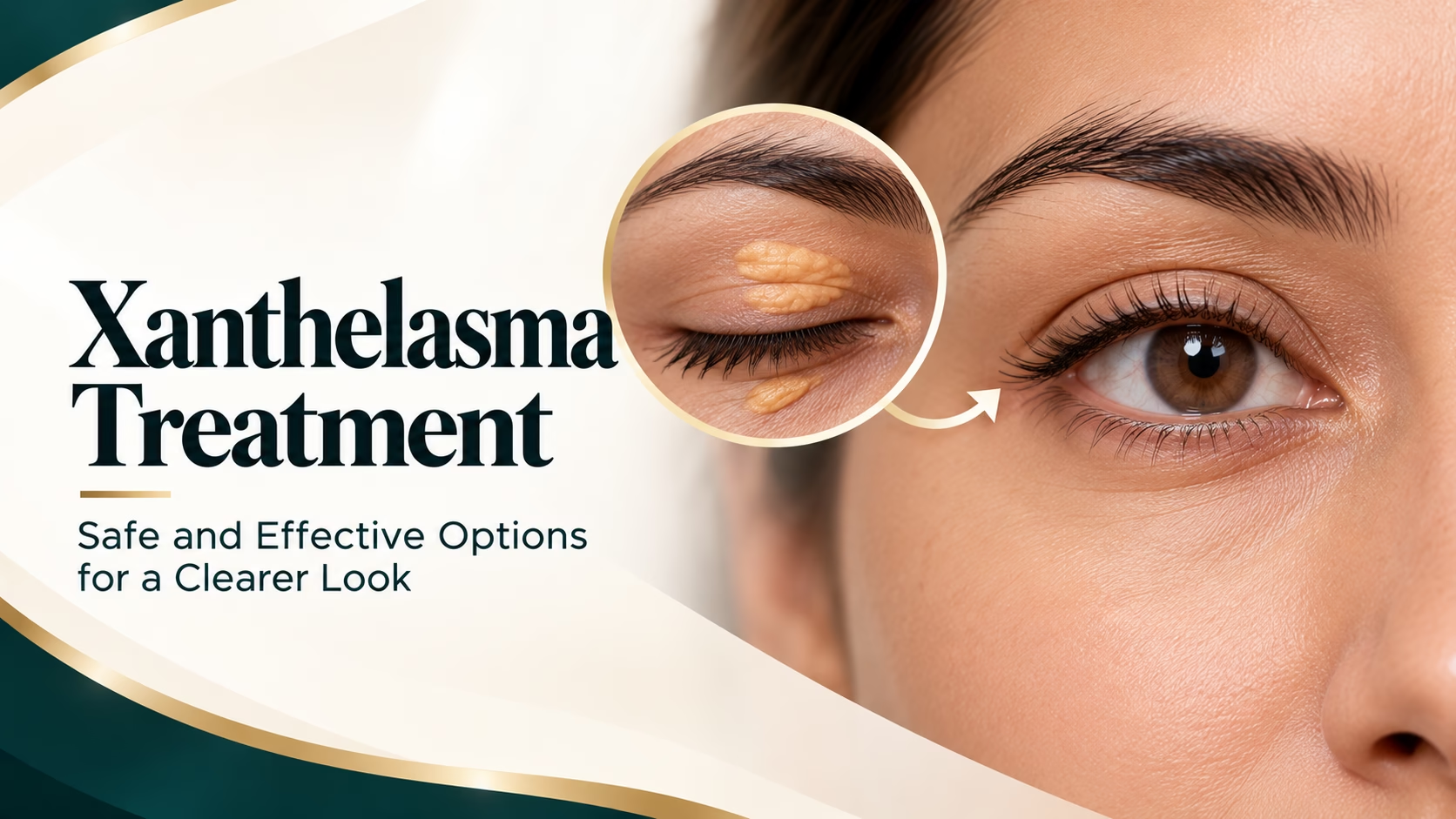
Have you noticed small yellowish patches or raised deposits around your eyelids? These patches may be xanthelasma, a condition in which cholesterol-containing material accumulates beneath the skin, usually near the inner corners of the upper or lower eyelids.
Xanthelasma is generally harmless in itself, but its appearance can be a cosmetic concern. Some people also discover that their cholesterol levels are elevated during medical assessment, although xanthelasma can occur even when blood cholesterol levels are normal.
If you are exploring xanthelasma treatment, it is important to understand how the condition is diagnosed, which removal options may be available, whether the deposits can return, and what to consider before treating such a delicate area.
This guide explains the main considerations and why treatment should be tailored to the individual.
What Is Xanthelasma?
Xanthelasma, also called xanthelasma palpebrarum, is a type of yellowish plaque that commonly develops on or around the eyelids. It consists of lipid-containing cells within the skin.
The deposits often appear near the inner corners of the eyes, particularly on the upper eyelids, although the lower eyelids can also be affected.
Xanthelasma may begin as a small, flat yellow patch and gradually become more noticeable or develop into a slightly raised plaque. It may affect one eyelid or both sides.
The condition is usually painless and does not typically interfere with vision. However, its location makes it noticeable to the person affected and others.
Xanthelasma is not the same as a stye, an ordinary skin cyst or a simple blocked oil gland. Correct identification is important because different eyelid lesions require different management.
What Does Xanthelasma Look Like?
Xanthelasma commonly appears as soft, yellowish or yellow-white patches around the eyelids.
Typical features may include:
- Flat or slightly raised yellow deposits.
- Patches near the inner corner of the upper eyelid.
- Similar deposits appearing on both sides.
- Gradual enlargement over time.
- Little or no pain or tenderness.
Not every yellow or raised eyelid lesion is xanthelasma. Other skin conditions and eyelid growths can look similar, so a medical assessment is appropriate when the diagnosis is uncertain.
A rapidly changing lesion, an unusual lump, bleeding, ulceration or changes affecting the eyelid margin should not simply be assumed to be xanthelasma.
What Causes Xanthelasma?
Xanthelasma develops when lipid-containing cells accumulate in the skin around the eyelids. Its exact development can involve several factors.
Elevated Cholesterol Levels
Some people with xanthelasma have elevated total cholesterol, LDL cholesterol or other lipid abnormalities. In these cases, the deposits may be one visible sign that further assessment of cholesterol levels is appropriate.
However, the relationship is not universal. A person can develop xanthelasma despite having lipid levels within the usual reference range.
Family History and Genetic Factors
Some individuals have a family history of xanthelasma or cholesterol-related conditions. Genetic factors can also influence how the body processes fats.
Age and Individual Predisposition
Xanthelasma is more commonly recognised in adults and may become more noticeable over time. Its development does not necessarily mean that a person has poor dietary habits or an unhealthy lifestyle.
Underlying Medical Conditions
Certain metabolic conditions may be associated with xanthelasma. A clinician may recommend blood tests or further evaluation based on your medical history, age and other risk factors.
Identifying possible contributing factors is important, but treating the underlying cholesterol abnormality and removing the visible deposits are two separate considerations.
Is Xanthelasma Dangerous?
Xanthelasma itself is generally benign and does not usually cause pain or affect eyesight.
However, its presence may justify checking cardiovascular risk factors, particularly if cholesterol levels have not been assessed recently or there is a relevant personal or family history.
A clinician may recommend a lipid profile and other investigations according to your overall health.
If your cholesterol is elevated, appropriate medical management can help address that risk. Removing the visible deposits does not treat high cholesterol or eliminate cardiovascular risk.
Likewise, having normal cholesterol levels does not mean that visible xanthelasma cannot be treated for cosmetic reasons.
Does Xanthelasma Go Away on Its Own?
Xanthelasma generally does not disappear spontaneously. The deposits may remain for years and can gradually become larger or more prominent.
Dietary improvements, exercise and cholesterol-lowering treatment may be important when medically indicated, but they do not reliably remove established deposits from the skin.
If the appearance is bothering you, a consultation can help determine whether removal is appropriate and which approach may be suitable for the location and extent of the deposits.
Avoid attempting to scrape, puncture or chemically treat the patches at home. The skin around the eyes is delicate, and self-treatment can cause injury, infection or scarring.
What Are the Treatment Options for Xanthelasma?
The most appropriate treatment depends on the size, depth and location of the deposits, the amount of eyelid skin involved, skin characteristics and the individual’s expectations.
Treatment should also take into account the possibility of pigment changes, scarring and recurrence.
1. Surgical Excision
Surgical excision involves removing the affected tissue through carefully planned incisions.
It may be considered for selected lesions, particularly when the deposits are more substantial or when direct removal is appropriate.
Because the eyelids have delicate skin and play an important role in eye protection and function, the surgeon must consider the position of the deposits, the amount of skin that needs to be removed and the risk of excessive tension or eyelid distortion.
Surgical excision can leave a scar. The likely appearance depends on the lesion’s size and location, the surgical technique and individual healing.
2. Laser Treatment
Certain lasers may be used to treat selected xanthelasma lesions by targeting or removing the affected tissue.
The appropriate laser and treatment settings depend on the lesion and the patient’s skin characteristics.
Potential concerns include temporary redness, changes in pigmentation, scarring and incomplete removal. Several sessions may be needed in some cases, and recurrence remains possible.
Laser treatment is not automatically safer or more effective than other approaches simply because it is less invasive. Suitability should be assessed by a clinician experienced in treating lesions around the eyes.
3. Electrosurgery or Other Ablative Techniques
Selected cases may be treated using techniques that remove or destroy the affected tissue with controlled energy.
The choice depends on the size, depth and position of the lesion and the clinician’s experience.
Because these procedures act on skin tissue, they carry potential risks such as burns, pigment changes, scarring and incomplete treatment. Careful technique is particularly important near the eyelids.
4. Chemical Treatment
Certain chemical agents have been used for selected xanthelasma lesions in clinical settings. Their suitability depends on the specific agent, concentration, lesion characteristics and the clinician’s experience.
Chemical treatment around the eyes requires particular caution because accidental contact with the eye can cause serious injury. Irritation, burns, pigmentation changes and scarring are possible.
Do not apply acids, wart-removal products or chemical peels to eyelid deposits at home.
Which Xanthelasma Treatment Is Best?
There is no single treatment that is best for every patient.
A small superficial deposit may be managed differently from a large plaque extending across the eyelid. The clinician must balance the likelihood of removal against the risk of scarring, pigment changes and disruption of normal eyelid anatomy.
A consultation should include a discussion of the expected result, possible complications, recovery requirements and the possibility that additional treatment may be needed.
Can Xanthelasma Be Removed Without Surgery?
Some non-surgical or minimally invasive methods may be suitable for selected lesions, depending on their characteristics and the clinician’s expertise.
However, non-surgical treatment does not mean risk-free treatment. Laser, chemical and other ablative methods can still cause skin injury or scarring, particularly in the delicate eyelid region.
Established xanthelasma usually does not disappear through skincare products or home remedies.
If you prefer to avoid surgery, discuss the available options with a qualified clinician and ask about their suitability for your particular lesion.
Does Xanthelasma Treatment Leave Scars?
Scarring is an important consideration because xanthelasma usually develops in a highly visible area of the face.
The risk depends on several factors, including:
- The size and depth of the deposits.
- The treatment technique used.
- The location on the eyelid.
- The amount of tissue treated.
- Individual skin characteristics and healing.
- The possibility of changes in skin pigmentation.
A carefully selected treatment may help minimise visible changes, but no procedure can guarantee scar-free removal.
During consultation, ask the clinician to explain the likely cosmetic outcome and the risks specific to your eyelid anatomy and skin type.
Can Xanthelasma Come Back After Treatment?
Yes. Xanthelasma can recur after removal, even when the original deposits have been treated successfully.
Recurrence may occur at the same site or nearby. It depends on factors such as the extent of the original lesion, the treatment method and individual predisposition.
Removing the visible deposit does not necessarily remove the factors that contributed to its development.
If you have elevated cholesterol, managing it according to medical advice remains important for your general health. However, cholesterol control cannot guarantee that xanthelasma will not recur.
Before treatment, ask about the possibility of recurrence and whether further treatment might be required.
What Should You Expect During a Xanthelasma Consultation?
A consultation allows the clinician to confirm whether the patches are consistent with xanthelasma and assess the safest approach.
The assessment may include:
Examination of the Lesions
The clinician will evaluate the size, number, thickness and location of the deposits. The distance from the eyelid margin and the amount of surrounding skin involved can affect treatment planning.
Review of Medical History
Your medical history may include previous eyelid procedures, skin conditions, medicines, allergies and any history of scarring or pigment changes.
Assessment of Cholesterol and Other Risk Factors
Depending on your history and previous test results, a clinician may recommend a lipid profile or further medical evaluation.
Discussion of Treatment Options
The clinician should explain which methods may be suitable, what the procedure involves and the possible benefits and risks.
Realistic Expectations
Treatment aims to improve or remove the visible deposits, but the final appearance varies. Scarring, incomplete removal and recurrence are possible.
A good treatment plan should prioritise both the cosmetic result and the preservation of normal eyelid function.
Recovery After Xanthelasma Removal
Recovery varies according to the technique used and the extent of treatment.
After a procedure, temporary redness, swelling, tenderness or a superficial wound may occur. The duration depends on the method and individual healing.
Your clinician will explain how to clean the area, protect the wound and use any prescribed medication. Avoid rubbing the eyelids or applying makeup and skincare products directly over the treated area until you are advised that it is safe.
Protecting the healing skin from sun exposure, once appropriate, may help reduce the risk of pigmentation changes.
Contact your treating clinician if you develop increasing pain, spreading redness, discharge or other unexpected symptoms.
Seek urgent medical attention for significant eye pain, changes in vision, severe swelling or any suspected chemical injury to the eye.
Can Diet and Cholesterol Management Prevent Xanthelasma?
A balanced diet, regular physical activity and appropriate medical management can help support cardiovascular health and healthy lipid levels.
If blood tests show elevated cholesterol, your doctor may recommend dietary changes, medication or other measures according to your individual risk.
These steps are important for general health, but they should not be presented as a guaranteed way to remove existing xanthelasma or prevent every recurrence.
Even people with normal cholesterol levels may develop these deposits. Management should therefore address both medical risk factors and the individual’s concerns about appearance.
Xanthelasma Treatment in Mumbai: Choosing the Right Specialist
When considering xanthelasma treatment in Mumbai, choose a qualified clinician who understands the anatomy of the eyelids and can explain the potential cosmetic and functional risks of treatment.
The correct approach depends on the lesion’s characteristics, the condition of the surrounding skin and your medical history. Because the treatment area is close to the eyes, avoiding unnecessary tissue damage and protecting normal eyelid function are especially important.
Dr. Kunal Sayani, MBBS, MS, MCh, DrNB (Plastic Surgery), provides consultations for plastic and aesthetic surgery concerns at Tvameva Aesthetics in Vile Parle West, Mumbai.
You can learn more about the clinic’s facial surgery services and discuss whether assessment by a plastic surgeon is appropriate for your concern. The specific suitability of any xanthelasma treatment should be confirmed during consultation.
Frequently Asked Questions About Xanthelasma Treatment
1. What is the best treatment for xanthelasma?
The best option depends on the size, depth and location of the deposits, as well as skin characteristics and individual expectations. Surgical excision, laser and other techniques may be considered in selected cases. A clinician should assess the lesion before recommending treatment.
2. Is xanthelasma caused by high cholesterol?
Xanthelasma can be associated with elevated cholesterol or other lipid abnormalities, but it can also occur in people whose cholesterol levels are normal. A clinician may recommend a lipid profile based on your medical history and risk factors.
3. Can xanthelasma disappear naturally?
Established xanthelasma generally does not disappear on its own. Managing cholesterol may be important for general health, but it does not reliably remove existing deposits from the skin.
4. Is xanthelasma removal painful?
The level of discomfort depends on the technique and the extent of treatment. Local anaesthesia may be used for some procedures. Your clinician should explain the expected sensations and the recovery process before treatment.
5. Will xanthelasma return after removal?
Recurrence is possible after treatment. The likelihood varies according to the lesion, the technique used and individual factors. No method can guarantee that the deposits will never return.
6. Does xanthelasma removal leave a scar?
Scarring is possible with surgical and non-surgical methods. The risk depends on the treatment, the size and location of the deposits, and individual healing. Ask your clinician about the expected cosmetic outcome before proceeding.
7. Can I use home remedies to remove xanthelasma?
Home remedies and over-the-counter chemical products are not recommended for removing eyelid deposits. They may cause irritation, burns, scarring or eye injury. Seek professional assessment instead.
8. Should I check my cholesterol if I have xanthelasma?
A cholesterol assessment may be appropriate, particularly if you have not had one recently or have other cardiovascular risk factors. Your doctor can advise whether testing or further evaluation is needed.
9. Is xanthelasma the same as a skin tag or eyelid cyst?
No. Xanthelasma consists of lipid-containing deposits in the skin, while skin tags and cysts have different characteristics. Because eyelid lesions can look similar, an examination may be needed to establish the diagnosis.
10. How do I choose a clinic for xanthelasma treatment in Mumbai?
Look for a qualified clinician who can assess the lesion, explain suitable options, discuss scarring and recurrence, and provide appropriate aftercare. Experience with the eyelid region and careful attention to eye safety are important considerations.
Book a Consultation in Vile Parle West, Mumbai
If you have yellowish deposits around your eyelids and are considering treatment, the first step is to establish the diagnosis and understand your options.
A consultation can help determine whether the lesion is consistent with xanthelasma, whether cholesterol testing may be appropriate, and which treatment approach—if any—best fits your circumstances.
Dr. Kunal Sayani at Tvameva Aesthetics provides plastic and aesthetic surgery consultations in Vile Parle West, Mumbai.
Learn more about the clinic’s facial surgery services.
Treatment suitability, risks and expected results should be discussed with your clinician before proceeding.
Leave a Reply